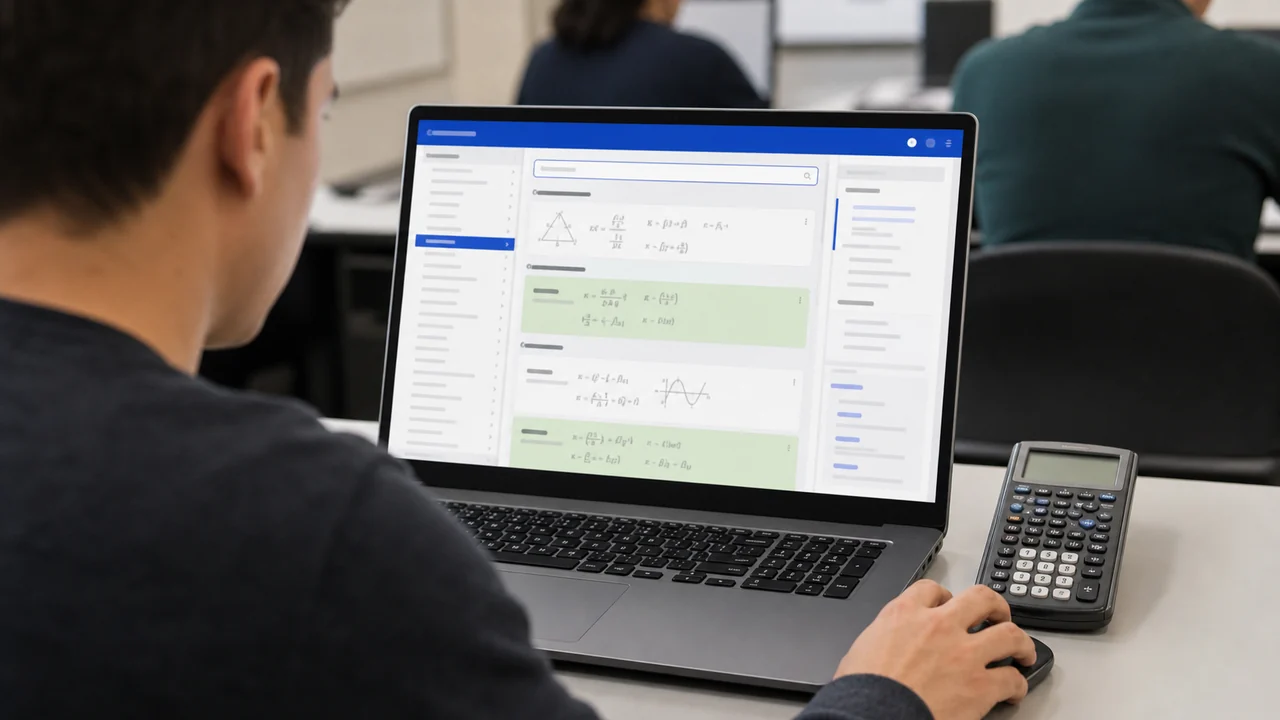
NCEES has a new FE Reference Handbook edition for the 2026 cycle: edition 10.6. This is not a reason to panic or throw out your study plan. It is a reason to update your study copy, re-check a few sections, and make sure you are practicing with the same reference habits you will use on exam day.
The short version: focus on three things first: trailing-zero significant figures, ethics and responsible-charge wording, and Thermodynamics. Page numbers moved too, but the bigger study question is whether you can recognize the problem type, jump to the right handbook section, choose the right formula or table, and run the calculator cleanly.
What Actually Matters
- Units: 10.6 adds clarification around significant figures for whole numbers with trailing zeros.
- Ethics: the section updates Model Law/Model Rules references and expands wording around responsible charge and licensure pathways.
- Thermodynamics: the section is four pages longer, so mechanical, chemical, and other-discipline candidates need fresh property-table navigation practice.
- Page shifts: useful to know, but not the main story. Do not build your prep around memorized page numbers.
- Best study response: use 10.6 for final review if your exam date is July 1, 2026 or later, and rebuild your quick lookup habits.
What Changed From 10.5 to 10.6?
Here is the practical version: the structure is mostly familiar, but a few pieces are worth a fresh look.
| Area | What changed | Test-day impact |
|---|---|---|
| Units and Conversion Factors | Adds a note about significant figures when an integer has trailing zeros. | Helps with rounding, precision, and fill-in-answer judgment. Do not assume every trailing zero means the same thing. |
| Ethics and Professional Practice | Updates Model Law/Model Rules references to the 2025-26 cycle and expands responsible-charge and education/licensure language. | Worth rereading because ethics questions often turn on wording, authority, responsibility, and what an engineer is allowed to sign or approve. |
| Thermodynamics | Expands by four pages and reflows property-table material. | Biggest practical effect for Mechanical, Chemical, and Other Disciplines. Re-practice water/refrigerant property lookups in the current PDF. |
| Terminology cleanup | Several sections show small wording, punctuation, or formatting cleanup. | Usually not a new concept, but exact-search habits and old screenshots may be less reliable. |
| Page numbers | The handbook is 506 pages instead of 502, and later sections shift. | Update personal notes that say “go to page ___,” especially in Thermodynamics and everything after it. |
1. The Trailing-Zero Note Is Small but Testable
Significant figures feel minor until you lose an easy fill-in or rounding question. The new Units and Conversion Factors note is basically a reminder that a whole number with trailing zeros can communicate different precision depending on notation. A value like 8,500 does not always carry the same precision as 8,500 with a marker over or under one of the digits.
How this affects studying: when a problem asks for a result “most nearly,” you usually still choose the closest answer. But if a fill-in, lab-style, or measurement question gives you precision clues, slow down for five seconds and think about the given data. This is especially relevant for all FE disciplines because units, conversions, and reported precision show up everywhere.
2. Ethics Got More Specific
Ethics and Professional Practice is one of the best point-per-hour sections on the FE. It is not algebra-heavy, it appears on every FE discipline, and it rewards careful reading. In 10.6, the section updates its Model Law and Model Rules references and expands wording around responsible charge.
The practical idea: “responsible charge” is not just being near the project or having your name on a document. It is about having real professional control, review authority, and responsibility for the work. That distinction matters on ethics questions where the tempting wrong answer sounds administratively convenient but does not match professional responsibility.
There is also updated education and licensure-path wording, including engineering technology language. Most FE candidates will not get a question that asks them to recite licensure pathways, but the FE can absolutely ask about professional practice, sealing work, supervision, conflicts, and when an engineer must refuse or escalate work. Give this section a fresh read instead of assuming your old ethics notes are enough.
3. Thermodynamics Is the Section to Re-Practice
Thermodynamics is the biggest practical 10.6 update. The section grew from 34 pages in 10.5 to 38 pages in 10.6, and the useful exam-prep effect is property-table navigation. That is exactly the kind of thing candidates waste time hunting for during practice.
If you are taking FE Mechanical, FE Chemical, or FE Other Disciplines, do not just glance at the new PDF. Open Thermodynamics and practice the lookup flow: saturated versus superheated, English versus SI units, water versus refrigerant, known temperature versus known pressure, and whether you need interpolation. If you can find the table quickly, the math is often straightforward. If you spend three minutes looking for the right table, the same problem suddenly feels hard.
4. Other Changes Look More Like Cleanup
We also saw small terminology or formatting changes in sections like Dynamics and Electrical and Computer Engineering. Examples include style cleanup around words like Thevenin/Thévenin and cybersecurity terms such as cross-site scripting. These are worth knowing if you search exact terms in your study PDF, but they do not look like a new topic blueprint.
The takeaway is simple: keep studying the same core topics, but do your final handbook practice in 10.6 if that is the version assigned to your exam date.
Which FE Students Should Care Most?
Every FE candidate needs a fresh pass through Units and Ethics. The Thermodynamics update matters more by discipline.
| Discipline | Best 10.6 review move | High-value topics to protect |
|---|---|---|
| FE Mechanical | Spend a dedicated session in Thermodynamics, Fluid Mechanics, and Heat Transfer with the 10.6 PDF open. | Thermodynamics, Fluid Mechanics, Dynamics, Mechanics of Materials, Mechanical Design. |
| FE Chemical | Re-check thermodynamic property lookups, material/energy balance setup, and heat-transfer references. | Material/Energy Balances, Thermodynamics, Heat Transfer, Mass Transfer, Fluid Mechanics. |
| FE Other Disciplines | Review Thermodynamics and Heat Transfer, then protect the broad scoring opportunities in Safety, Economics, and Ethics. | Fluid Mechanics, Thermodynamics/Heat Transfer, Statics, Dynamics, Strength of Materials. |
| FE Environmental | Thermodynamics is lighter here, so focus on Units, Ethics, Economics, and fast Fluid/Hydraulics lookups. | Water/Wastewater, Fluid Mechanics and Hydraulics, Hydrology, Air Quality, Environmental Chemistry. |
| FE Civil | Thermo is not the main concern. Re-read Ethics and keep Fluid Mechanics, Water Resources, Structures, Geotech, and Transportation sharp. | Water Resources, Structural, Geotechnical, Transportation, Statics, Mechanics of Materials. |
| FE Electrical and Computer | Update Units/Ethics and keep exact-term searches flexible. Your pass still comes from circuits, systems, digital, power, and math. | Circuit Analysis, Mathematics, Power Systems, Digital Systems, Electronics, Control Systems. |
Fast Handbook Navigation Is Still the Big Lever
You said it exactly right: once you know what kind of problem you are looking at, what formula or table you need, and how to run the calculator efficiently, a lot of the FE becomes straightforward. The hard part is getting those three steps to happen quickly under a timer.
Train this sequence:
- Recognize the problem type. Is this Euler's formula, a Bernoulli problem, a beam-deflection lookup, a time-value-of-money factor, a saturated vapor table, or an ethics/responsible-charge scenario?
- Jump to the right handbook area. Use section names and topic cues instead of relying only on page numbers.
- Choose the formula or table. Check units, assumptions, and whether the problem wants a value, ratio, rate, or comparison.
- Run the calculator cleanly. Store intermediate values, use solver/matrix/stat tools when they save time, and avoid rounding too early.
That is why our FE Reference Handbook navigation guide is still one of the most important prep articles on the site. It is not about memorizing 500 pages. It is about turning the handbook into a tool you can use in under 30 seconds.
How FE Test Prep Helps With This
The FE Test Prep app is built around the same workflow. When you miss or review a question, the explanation is not just “here is the answer.” It points you toward the relevant handbook area, shows the key signals that identify the problem type, gives quick formula context, and includes calculator keystrokes where they matter.
That is especially helpful for returning engineers and students who feel rusty. You do not need to relearn every course from scratch. You need enough recognition to choose the right method, enough handbook fluency to find the support material, and enough calculator fluency to finish the calculation under exam time.
For the calculator side of the triangle, use our TI-36X Pro tutorial and FE calculator guide. For topic weighting by discipline, use the study guides linked above or the NCEES exam changes and specifications guide.
What To Do Before a July 1, 2026 or Later Exam
- Download the current official PDF from MyNCEES. Use the version assigned to your exam date.
- Read Units and Ethics in 10.6. These are broad, high-return sections for every FE discipline.
- Re-practice Thermodynamics if your discipline uses it. Focus on finding the right property table quickly.
- Stop trusting old page-number notes. Convert them into section and formula cues instead.
- Do mixed practice. The FE is not “do I know the formula?” It is “can I recognize the problem, find the support, calculate, and move on?”
Sources
This guide is based on an independent side-by-side review of FE Reference Handbook versions 10.5 and 10.6, plus NCEES public exam and handbook guidance. Use MyNCEES for the official handbook assigned to your exam date.
FAQ
Does the 10.6 handbook mean the FE exam changed?
Not by itself. Handbook editions and exam specifications are separate. The current FE discipline specifications still matter most for topic weighting. The handbook update mainly affects your lookup habits, wording familiarity, and final review.
Do I need to relearn everything if I studied with 10.5?
No. Keep your topic knowledge. Update your PDF, reread Units and Ethics, and re-practice Thermodynamics if it is important for your discipline.
Can I rely on page numbers from older prep books?
Only as a rough hint. Page numbers move between editions. Section names, formula names, and problem-recognition cues are more durable than page numbers.
Practice the Way the FE Actually Works
FE Test Prep gives you timed questions, step-by-step explanations, handbook lookup cues, quick formula references, key signals, and calculator keystrokes so you can build the recognize, look up, calculate habit before exam day.